The End of Fast Fashion? New EU Textile Regulations Explained (ESPR 2026)
The fashion industry is facing its biggest regulatory shake-up in decades. The European Union has singled out textiles as a priority sector for the new Ecodesign for Sustainable Products Regulation (ESPR). This isn't just a suggestion; it's a fundamental shift in how clothes are designed, sold, and recycled in Europe.

For Shopify fashion brands selling into Europe, this means "business as usual" is over. Whether you are a small streetwear brand in Berlin or a massive denim exporter in Los Angeles, the new rules apply to you. Here is your comprehensive guide to the upcoming mandatory Digital Product Passports (DPP) for textiles.
1. The "Destruction Ban": A Game Changer
One of the most aggressive parts of the new regulation is a ban on the destruction of unsold consumer textiles and footwear. For years, luxury and fast-fashion brands alike have burned or shredded unsold inventory to protect brand value or clear space.
The New Reality: Large companies will have to publicly disclose how much unsold inventory they discard and why. Eventually, this practice will be banned entirely.
The Angle for You: Even if you are a smaller brand, proving you have a circular strategy (repair, resell, recycle) will become a key differentiator. Consumers are waking up to the waste crisis, and a Digital Product Passport that shows a "End of Life" plan builds immense trust.
2. Mandatory Fiber Transparency & Microplastics
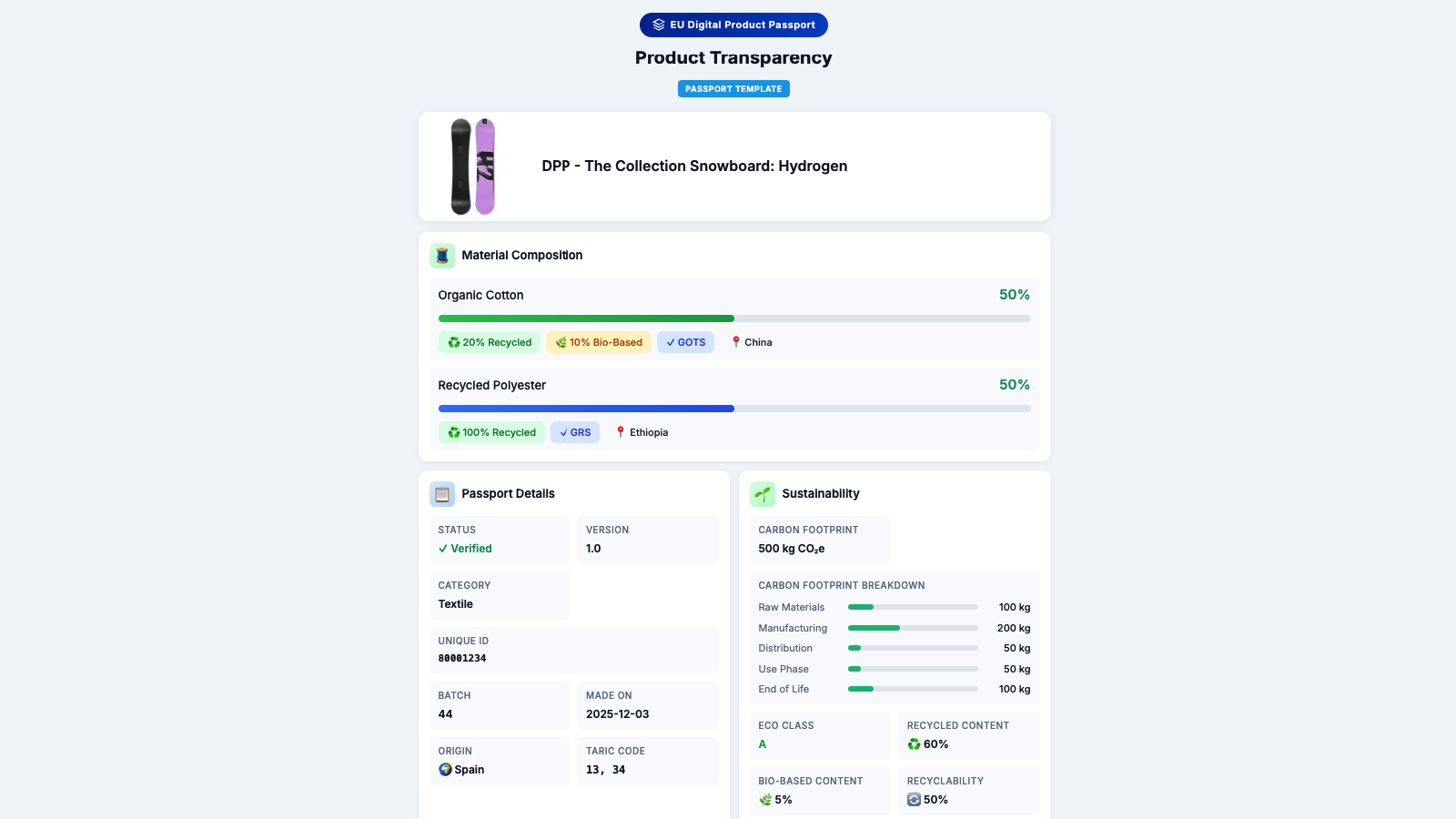
The DPP will require granular data on material composition. It's no longer enough to say "100% Cotton". The regulation demands a level of transparency that most brands currently don't have. You will likely need to specify:
- Recycled Content: Percentage of recycled fiber, and crucially, whether it is pre-consumer (factory scraps) or post-consumer (old clothes).
- Fiber Origin: Country of origin for the raw fiber (e.g., Cotton from India) separate from the milling and assembly locations.
- Microplastic Shedding: For synthetics like polyester and nylon, brands may need to declare verified microplastic shedding rates based on standardized tests.
Note: PassportPro's material library is pre-configured to accept these exact data points, so you don't have to guess what's required.
3. The "Green Claims Directive" (Anti-Greenwashing)
Closely linked to the ESPR is the Green Claims Directive. This law effectively bans vague environmental claims like "Climate Neutral" or "Planet Friendly" unless they are backed by a standardized lifecycle assessment.
If you want to market your eco-friendly collection, you need data. The DPP is your compliant way to present that data to the consumer without cluttering your marketing copy.
4. Durability, Repairability & The "Eco-Score"
The EU wants clothes to last longer. "Disposable" fashion is the enemy of the ESPR. Your Digital Product Passport will likely serve as a report card for your product's quality.
- Durability Scores: Technical data on color fastness, tear strength, pill resistance, and zipper quality.
- Repairability: Can the garment be easily repaired? Are spare buttons provided? Is there a repair guide accessible via the QR code?
- Material Complexity: Blended fabrics (like Cotton/Poly mixes) are hard to recycle. The DPP will highlight this, pushing brands toward mono-material designs.
Comparing DPP Solutions: Which One Do You Need?
As the mandate approaches, several solutions are popping up. Here is how they stack up for Shopify merchants:
- Enterprise PLM Software (Centric, etc.): Great for designing, but extremely expensive ($50k+/year) and often doesn't connect easily to your Shopify storefront for the consumer view.
- Blockchain-Only Solutions: Good for immutability, but often bad for user experience (nobody wants to connect a crypto wallet to see how to wash a shirt).
- Shopify Native Apps (PassportPro): Built specifically for merchants. It reads your existing product data, lets you enrich it, and generates the QR code and frontend page automatically.
Try the Shopify Native Solution
How to Prepare Your Brand (A 3-Step Strategy)
The deadline (likely 2026/2027 for textiles) feels far away, but supply chains move slowly. Here is how to start today.
Step 1: Audit Your Supply Chain
Start asking your suppliers for more data now. "Where exactly is this fabric milled?" "Do you have the GOTS certificate?" "What are the chemical inputs?" If your supplier can't answer, you have a risk.
Step 2: Centralize Your Data with PassportPro
Spreadsheets won't cut it. You need a structured database. Using PassportPro's Material Library, you can create digital records for your core fabrics.
Define "Recycled Denim" once—inputting its certs, origin, and composition—and apply it to your entire jeans collection. This makes compliance scalable.

Step 3: Start with a "Shadow" Passport
You don't have to publish everything immediately. Start building internal passports for your top 5 best-sellers. See where your data gaps are. When the regulation hits, you will be the brand ready to go live while your competitors scramble.
Conclusion
The brands that win in the next decade will be the ones that can prove their quality. The Digital Product Passport is your tool to do exactly that—turning compliance into a competitive advantage.