Why Supply Chain Transparency is the New Standard (And How to Automate It)
Consumers today are skeptical. They've heard "sustainable" and "eco-friendly" a million times. To cut through the noise, modern brands are moving from storytelling to story-proving. At the center of this shift is a humble technology we all use every day: the QR Code.
But we aren't talking about the static QR codes of the past. We are talking about dynamic, identifying data carriers that link physical products to their digital twins.
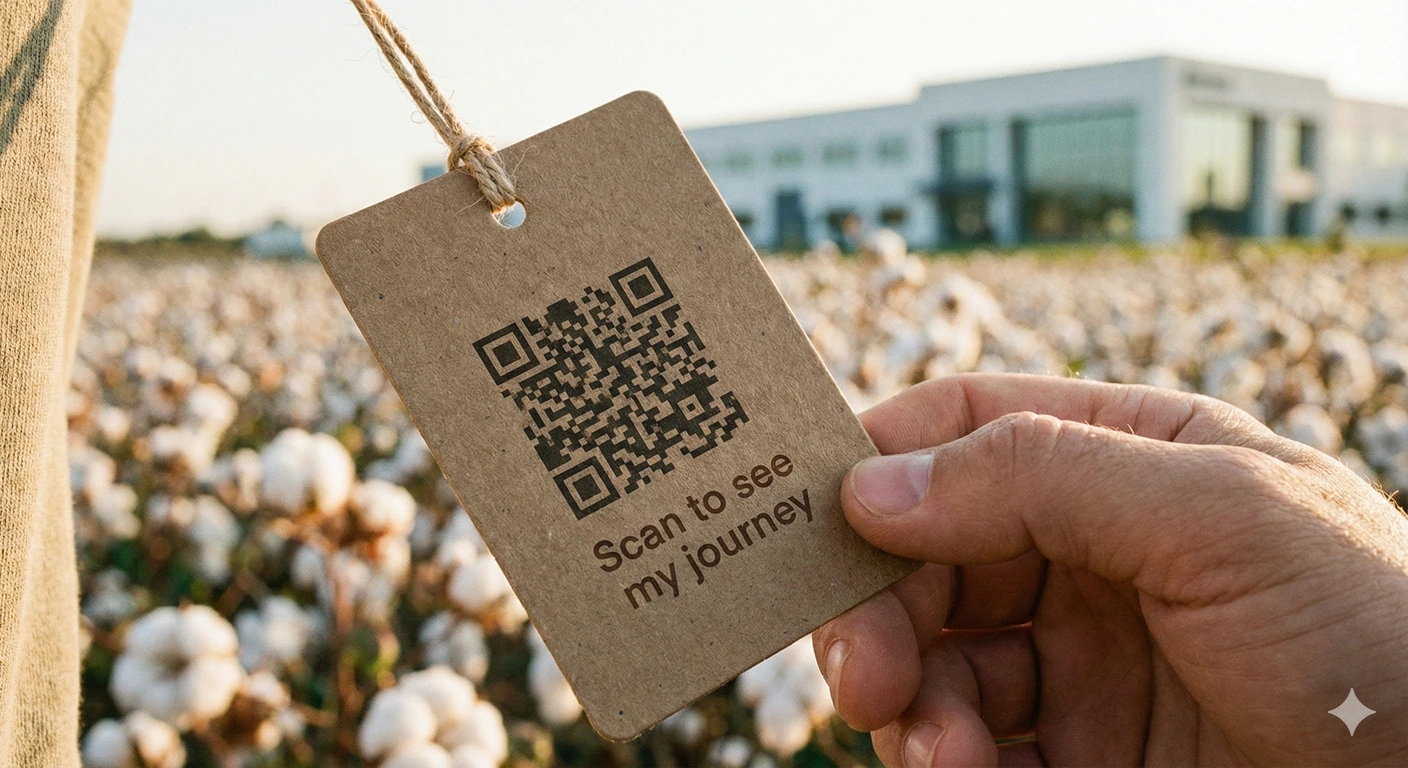
The Digital Product Passport (DPP) is the vehicle for this transparency. But implementing it effectively requires understanding the difference between simple "marketing" and true "traceability".
The Problem with Static Packaging
Traceability is the ability to track every step of your production process. It answers the questions: Who made this? Where was it made? When was it made?
Most brands fail at this because they rely on static packaging. If you print "Made in Portugal" on your box, but you switch suppliers to Italy next month due to supply chain issues, you have a problem. You either throw away thousands of dollars of packaging, or you ship mislabeled goods (which is illegal).
Pro Tip: PassportPro allows you to update the destination of a QR code even after it's printed, saving you from costly reprint disasters.
The Solution: The "Live" QR Code (Batch-Level Tracking)
To solve the static packaging problem, you need Batch-Level Tracking. This is the technical backbone of modern traceability.
- The Master Product: You have a "T-Shirt" product in Shopify.
- The Print Run: When you order 500 units from Factory A, you generate a unique QR code just for that batch (e.g., Batch #001).
- The Link: That QR code links to a passport specifically showcasing Factory A's data.
If you order the next 500 units from Factory B, you generate a new Print Run (Batch #002). The QR code looks different (or links differently), showing Factory B's data. This is true traceability.
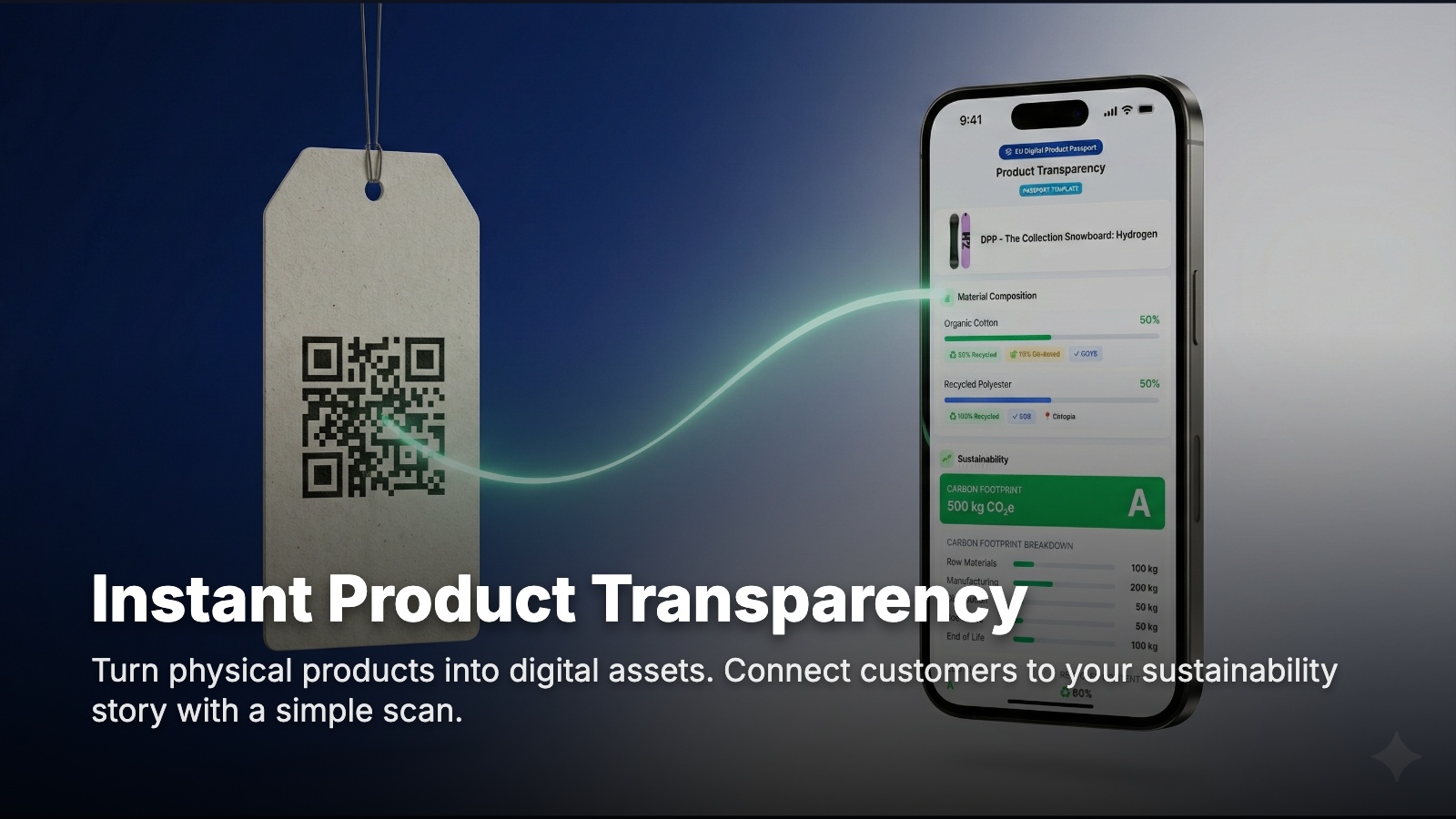
The "Sunrise 2027" and GS1 Digital Link
You might be asking: "Does this mean I need two barcodes on my product? One UPC for the checkout layout and one QR code for the customer?"
For now, maybe. But not for long.
GS1 Sunrise 2027 is a global initiative to replace the traditional 1D barcode (UPC/EAN) with the 2D barcode (QR Code). By 2027, point-of-sale systems worldwide will be able to scan QR codes that contain standard GTIN data.
What is GS1 Digital Link?
It's a standard that turns a QR code into a multi-purpose tool.
- At Checkout: The scanner reads the GTIN to look up the price.
- On Phone: The consumer scans it to see the Digital Product Passport.
- In Warehouse: The logistics team scans it for inventory management.
PassportPro is built with these future standards in mind. By organizing your data into "Print Runs" now, you are preparing your data structure for a future where every single item has a unique digital identity.
Technical Specs: What Makes a Good Data Carrier?
If you are printing millions of labels, you can't afford mistakes. Here are the technical considerations for your traceability project:
1. Error Correction Level
QR codes have built-in redundancy. We recommend using Level M (15%) or Level Q (25%). This ensures that even if the tag gets wrinkled, scratched, or slightly torn during shipping, it still scans perfectly.
2. Minimum Size
For a reliable consumer scan, the QR code should be at least 10mm x 10mm (0.4 inches). Anything smaller risks frustrating the user.
3. Call to Action (CTA)
Don't just slap a code on the tag. Tell the user why they should scan it.
Bad: [Just the Code]
Good: "Scan for Sustainability Info"
Best: "Scan to see exactly who made this shirt"
Start Generating Smart QR Codes Free
The ROI of Transparency: Validated Trust
Does this actually help you sell more? Yes. Studies from MIT and others consistently show that customers are willing to pay a premium (often 4-10%) for products with proven transparency.
By placing the PassportPro widget on your product page, you aren't just complying with a law—you are adding a premium trust badge. It functions like social proof. It says: "We have nothing to hide."
Anti-Counterfeiting & Grey Market Protection
A Digital Product Passport also protects your brand revenue.
- Fake Check: If a customer buys a "luxury" bag on eBay and scans the code, they should see the authentic passport hosted on your domain (or a verified resolver). If the code is fake or doesn't scan, they know it's a counterfeit.
- Grey Market: If you see a batch of products appearing in a region you didn't sell to (e.g., products meant for the US appearing in a discount store in Asia), you can track which specific distributor bought that batch via its Print Run ID.
Preventing "Greenwashing" Accusations
Regulators in the EU and US are cracking down on vague environmental claims (the EU "Green Claims Directive"). Saying "We are sustainable" without proof is now risky. In fact, you can be fined up to 4% of your turnover for misleading claims.
A Digital Product Passport protects your brand by providing the evidence to back up your marketing. Don't just say you're sustainable. Show the math.