Selling to the EU? The New Rules for US Brands in 2026 (ESPR Guide)
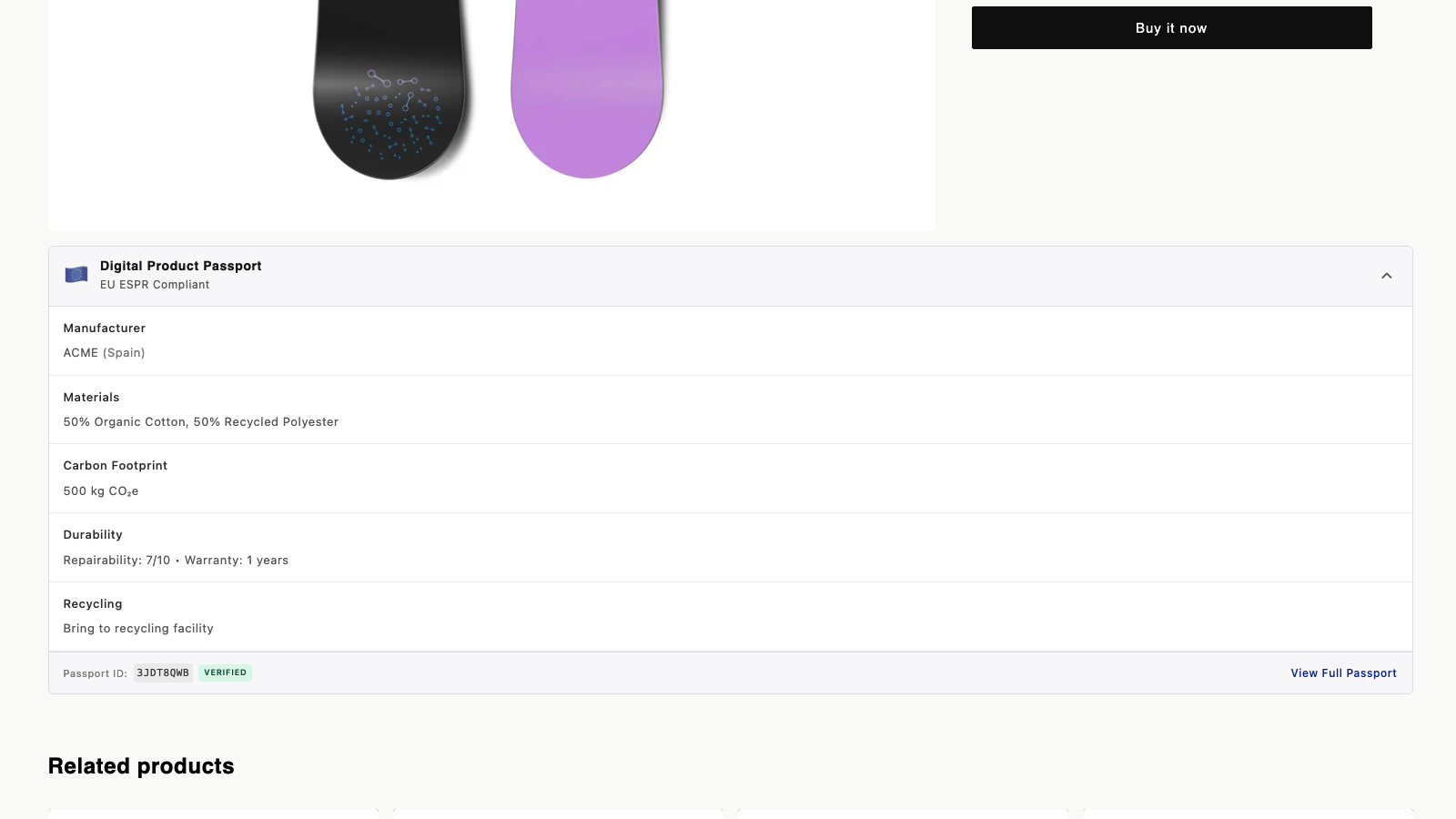
First, it was GDPR. Now, US brands selling into the European Union are facing a new compliance hurdle: the Digital Product Passport (DPP). Under the new Ecodesign for Sustainable Products Regulation (ESPR), the "Wild West" days of international e-commerce are ending.

If you are a US-based merchant using Shopify Markets to ship internationally, you might think EU regulations don't apply to you because you are incorporated in Delaware or Wyoming. They do. If your product enters the EU market, it must comply with EU laws.
"I'm just a small brand. Does this apply to me?"
Yes. Unlike some regulations that only target giants, the ESPR places the responsibility on the "economic operator" placing the product on the market.
If you are shipping DDP (Delivered Duty Paid) via Shopify Markets Pro or Global-e, you are technically the importer of record. This means YOU are responsible for ensuring the product has a compliant passport.
Solution: PassportPro integrates directly with your Shopify product data to create valid passports that satisfy these cross-border requirements.
The "Brussels Effect": Why You Can't Ignore This
Scholars call it the "Brussels Effect"—when the EU regulates something, it often becomes a de facto global standard. We saw it with USB-C ports on iPhones, and we saw it with privacy banners (GDPR).
The State of California, New York, and Washington often follow EU standards within 2-3 years. By preparing for the EU Digital Passport now, you are essentially future-proofing your business for compliant sales in the US market down the road.
Enforcement: Will I Actually Get Caught?
The EU is upgrading its Market Surveillance Authorities (MSAs). They aren't relying on guys with clipboards anymore.
Customs agencies are automating their checks. In the near future, packages arriving from the US may be scanned. If the GTIN (barcode) on your package doesn't link to a valid Digital Product Passport in the central registry, the package could be automatically flagged for return or destruction.
The Risk: Non-compliant products can be blocked at the border, leading to expensive returns, destroyed inventory, and unhappy customers.
Action Plan: How to Secure Your EU Sales
1. Assign an Authorized Representative
If you don't have a physical office in the EU, you may need an "Authorized Representative" to hold your compliance documents. Your Digital Product Passport serves as the "source of truth" for this representative.
2. Digitize Your Certifications
EU regulations are strict about greenwashing. If you marketing says "Eco-friendly," you need to prove it under the Green Claims Directive.
PassportPro allows you to upload your certifications (like OEKO-TEX, GOTS, or Leaping Bunny) directly to the passport. This verifiable data is your "get out of jail free" card if a regulator questions your claims.
3. Map Your Supply Chain
US brands often have opaque supply chains ("We just order from the factory"). You need to know more. Use PassportPro's Manufacturer Library to store facility locations and compliance data securely.
4. The Physical Link (QR Code)
The visible sign of compliance is the QR code. It needs to be on your product, packaging, or documents accompanying the product.
Generate Compliant QR Codes Now
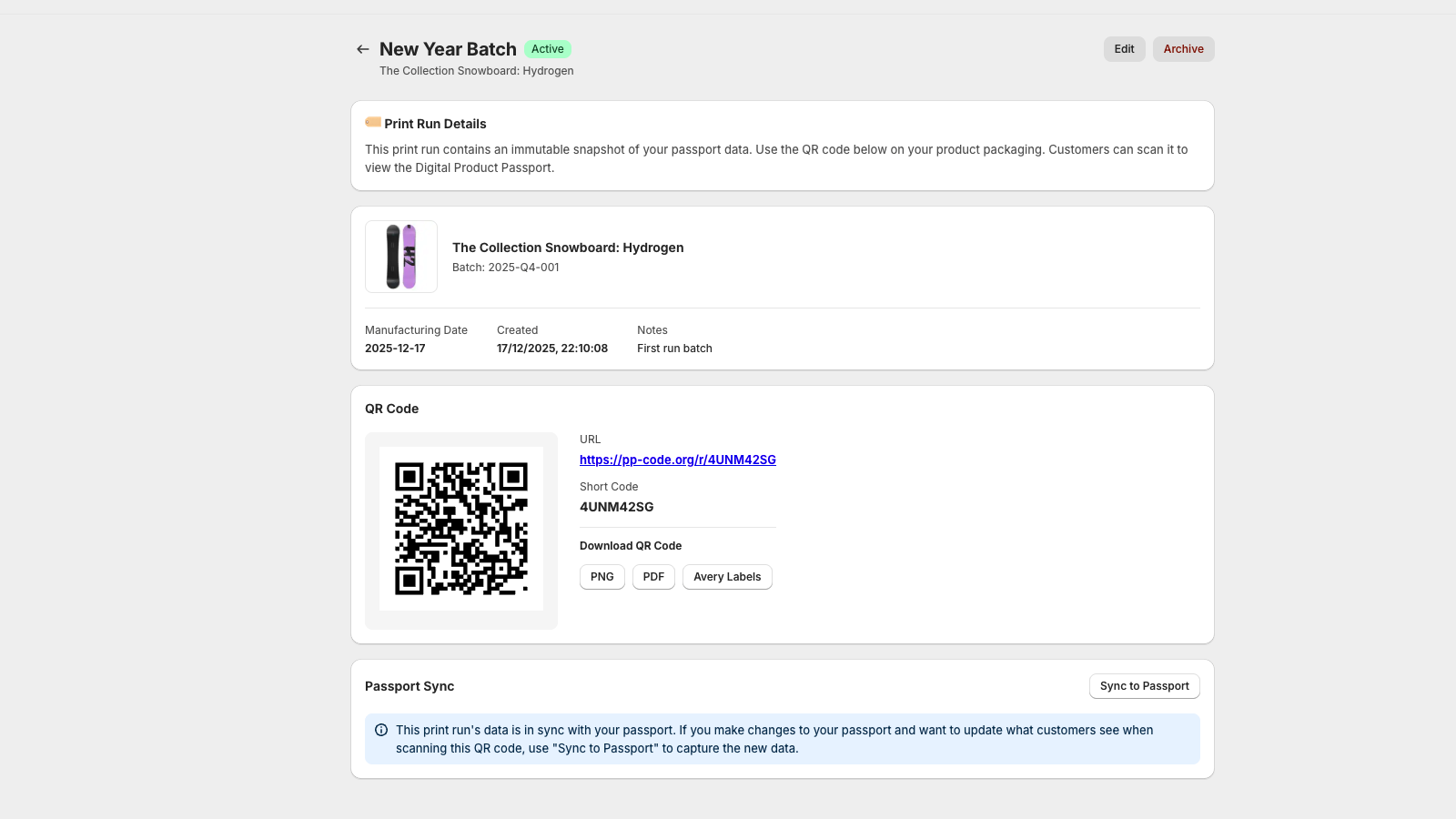
Use PassportPro to generate unique QR codes for your export batches.
Conclusion: A Premium Experience
While this sounds like a headache, it's actually a massive opportunity. EU consumers are highly conscious of sustainability. By voluntarily adopting a Digital Product Passport, you signal that you aren't just a "dropshipper"—you are a serious, transparent international brand.