What is a Digital Product Passport (DPP)? The Comprehensive 2026 Guide
Sustainable commerce is no longer just a trend—it's the law. The European Union's ambitious Ecodesign for Sustainable Products Regulation (ESPR) has introduced a groundbreaking requirement that will reshape global supply chains: the Digital Product Passport (DPP).
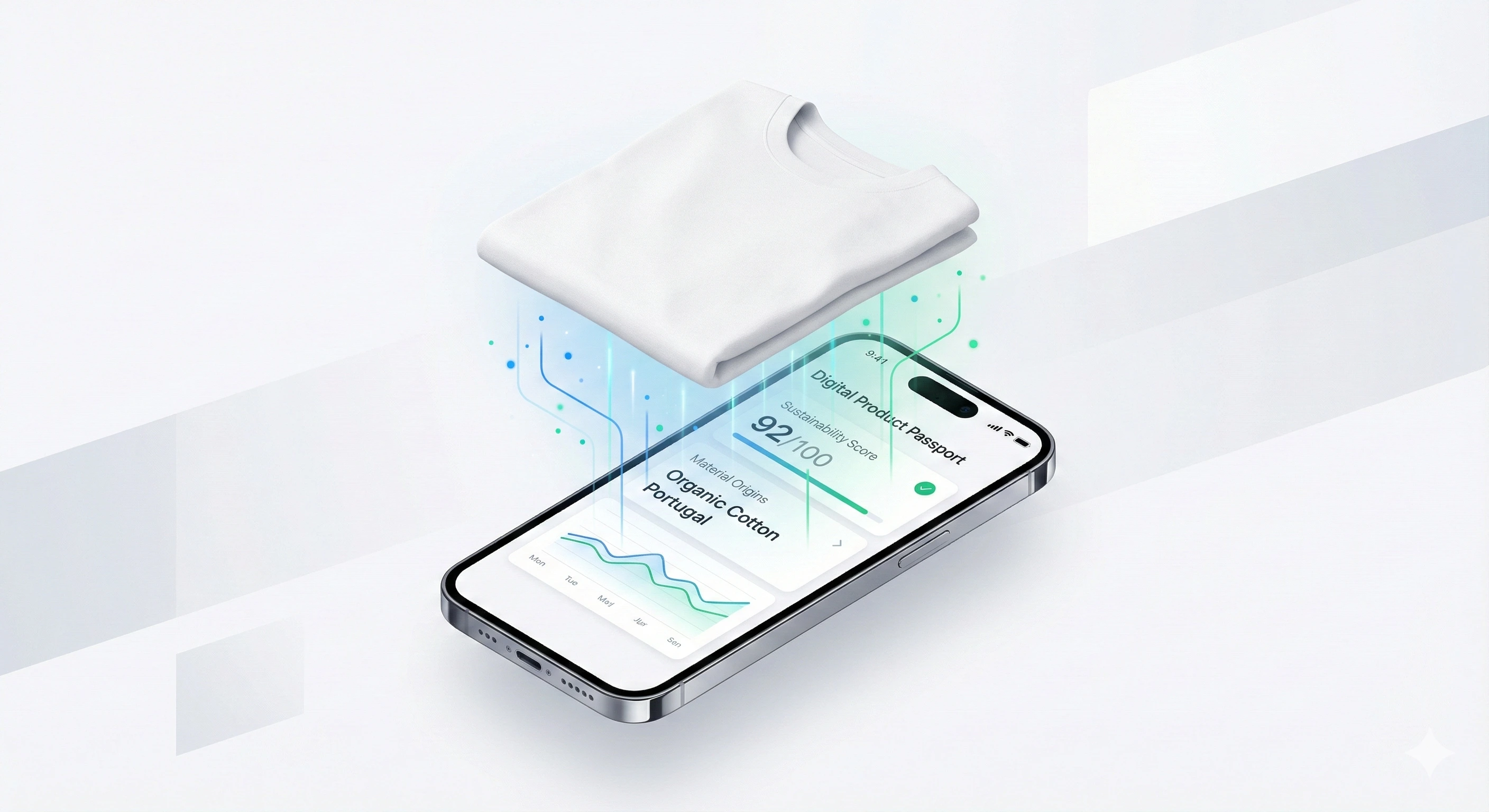
If you sell products in the EU, whether you are based in Paris, New York, or Tokyo, this regulation affects you. But what exactly is a DPP, and what does it mean for your Shopify store? In this guide, we'll break down the requirements, legal timelines, and how you can turn compliance into a competitive advantage.
The Basics: What is a DPP?
A Digital Product Passport is a digital record that provides comprehensive information about a product's sustainability, environmental impact, and circularity. Think of it as a "digital twin" or a "birth certificate" for your product that travels with it throughout its entire lifecycle—from raw material extraction to recycling.
Ready to create your first passport? PassportPro makes it easy to generate compliant digital records for your entire catalog in minutes.
The goal of the DPP is to:
- Increase Transparency: Allow consumers to know exactly what they are buying.
- Facilitate Circularity: Give recyclers the data they need to properly process used goods.
- Track Sustainability: Monitor carbon footprints and supply chain ethics.
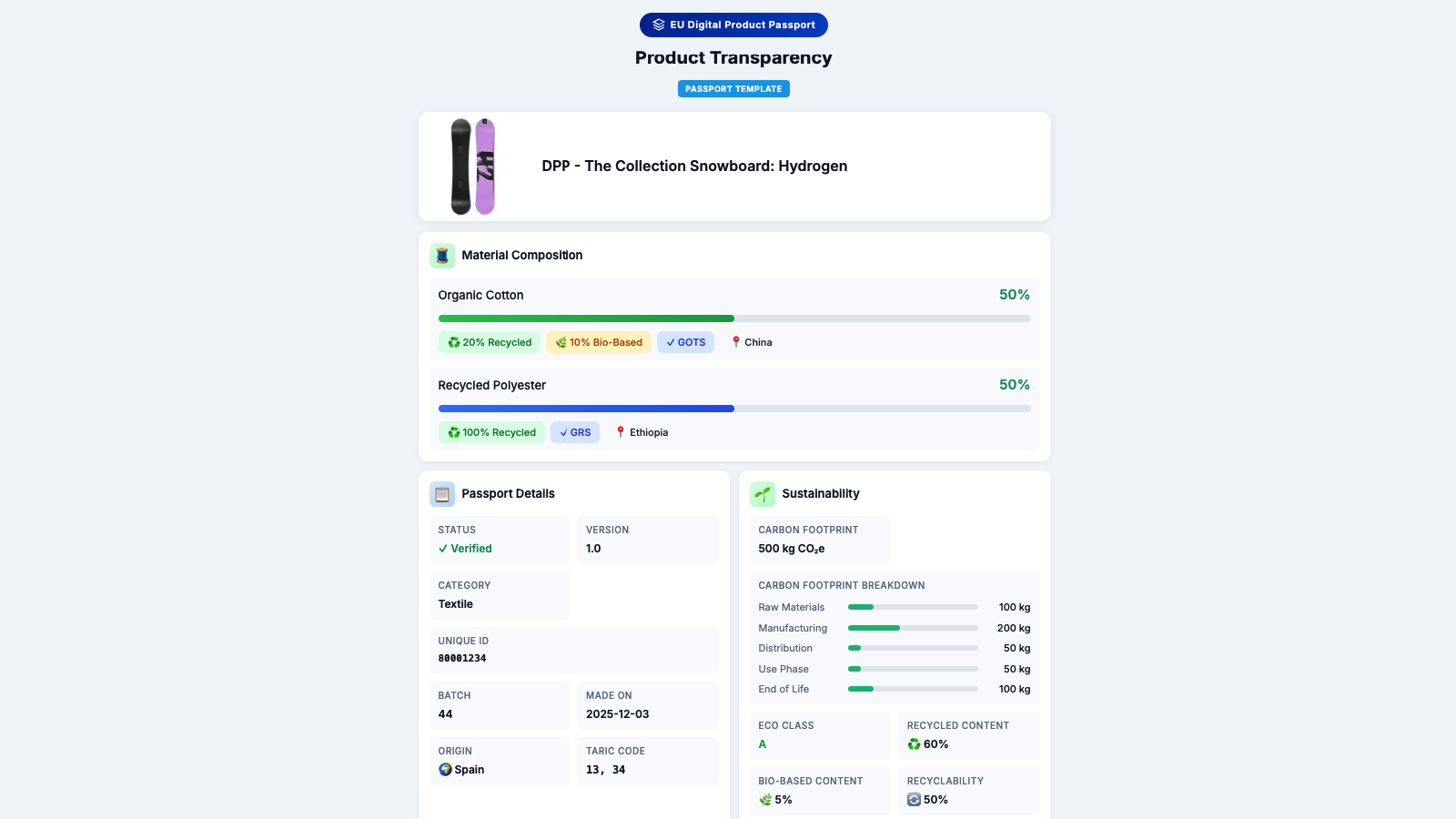
Above: An example of a compliant Digital Product Passport generated by PassportPro.
The "Data Carrier": How it Works
The regulation specifies that the passport must be accessible via a data carrier physically present on the product or its packaging. In most cases, this will be a QR Code.
When a consumer, regulator, or recycler scans this QR code, they are taken to a public web page (the passport) that hosts all the required data. This link must be:
- Immutable: The specific batch data shouldn't change after production (except for corrections).
- Accessible: Free to access for everyone.
- Machine-Readable: Structured so that other software systems can read it.
Who Needs to Comply? (Sector Scope)
The regulation covers almost all physical goods placed on the EU market. However, the rollout is staged. The first "delegated acts" prioritize high-impact industries:
- Textiles & Apparel (Priority): Detailed fiber composition, recycled content, and durability scores are expected to be mandatory by 2026/2027.
- Batteries: Industrial and EV batteries already have requirements for capacity, health, and cobalt content.
- Consumer Electronics: Focus on repairability scores, energy efficiency, and spare parts availability.
- Furniture: Requirements for material sourcing (timber regulations) and harmful substance declarations.
Timeline: When is the Deadline?
The ESPR framework entered into force in mid-2024. However, the specific requirements for each category come into effect through "Delegated Acts."
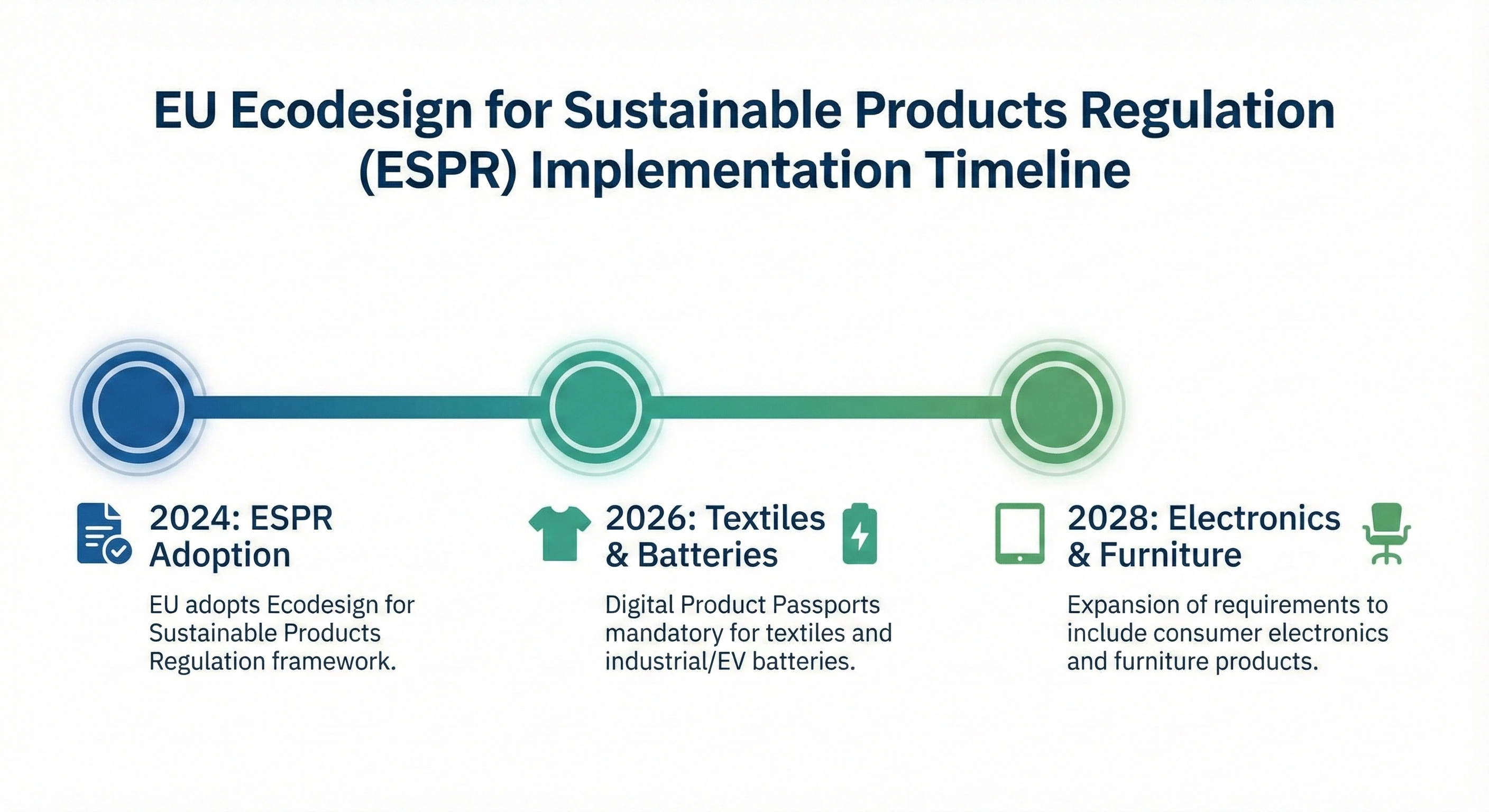
2026-2027 is the critical window. Brands that start preparing now will have a significant advantage. Collecting supply chain data takes time—you cannot build a material library overnight. We recommend starting your "Digital Twin" project immediately to identify data gaps in your supply chain.
Key Information Required in a Passport
While requirements vary by category, most passports must typically include:
- Product Identification: Unique ID (GTIN/EAN), batch number, and manufacturing date.
- Material Composition: Detailed breakdown of materials and percentage of recycled content.
- Supply Chain: Manufacturer details, facility locations, and origin countries.
- Sustainability & Circularity: Carbon footprint (LCA), repair instructions, and recycling guides.
- Compliance: CE markings, safety certifications, and substance of concern declarations (REACH).
How PassportPro Helps Shopify Merchants
Building this implementation from scratch is complex. You need a database, a QR code generator, a hosting solution for the passports, and a way to manage compliance updates.
PassportPro is the first app built specifically for Shopify merchants to automate this entire process. We handle the technical complexity so you can focus on your brand.
With PassportPro, you can:
- Component Libraries: Define your Manufacturers and Materials once, and reuse them across thousands of products.
- Native Integration: Manage passports directly inside your Shopify Product admin—no external dashboards needed.
- Print Runs: Generate immutable QR codes for each production batch (Print Run), a critical requirement for traceability.
- Consumer Trust: Display a beautiful, branded passport page that increases conversion rates.

Next Steps
Compliance is an opportunity, not just a cost. Brands that embrace transparency build deeper trust with their customers. Start building your digital passports today.